
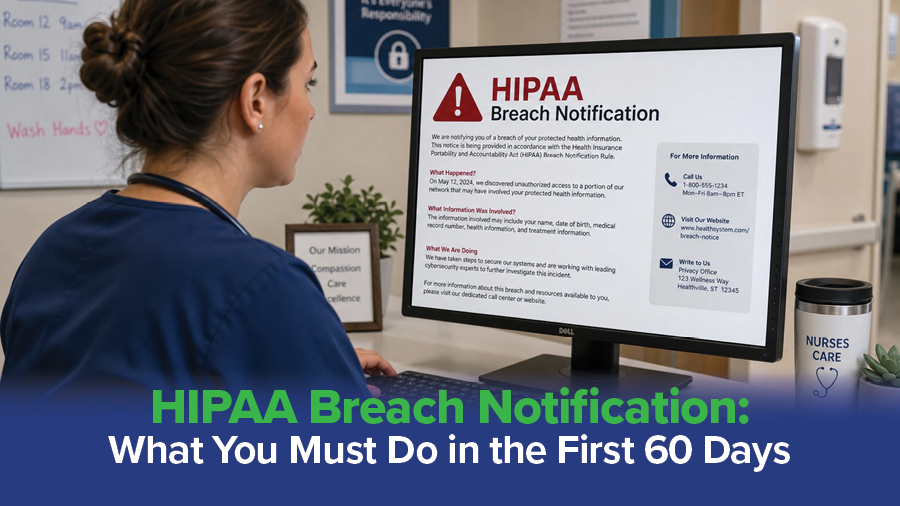
A breach has occurred. Patient data has been exposed. The incident is confirmed. Now what?
For many healthcare organizations, the moment a data breach is confirmed is also the moment the HIPAA Breach Notification Rule begins to apply. The compliance clock starts immediately, yet many organizations are uncertain about what must be reported, when notifications are required, and the consequences of missing critical deadlines.
The HIPAA Breach Notification Rule is specific, enforceable, and leaves little room for improvisation. Understanding its requirements and documenting your breach response process before an incident occurs is not simply a compliance obligation. It is an essential part of healthcare cybersecurity and operational resilience.
What Counts as a Notifiable HIPAA Breach?
Not every cybersecurity incident requires HIPAA breach notification.
The HIPAA Breach Notification Rule applies when there is an impermissible use or disclosure of protected health information (PHI) that compromises the security or privacy of that information.
HIPAA operates under a presumption that an impermissible disclosure of PHI constitutes a breach unless the covered entity or business associate can demonstrate that there is a low probability the PHI has been compromised through a documented four-factor risk assessment.
Those four factors include:
- The nature and extent of the PHI involved
- Who accessed or could have accessed the PHI
- Whether the PHI was actually acquired or viewed
- The extent to which the risk has been mitigated
That risk assessment is not optional. It provides the legal basis for determining whether notification is required. Without documented analysis, organizations may not have sufficient justification for deciding not to notify.
Understanding the HIPAA Breach Notification Timeline
Once a breach has been confirmed, organizations face three separate notification obligations.
Notify Affected Individuals
Covered entities must notify affected individuals without unreasonable delay and no later than 60 calendar days after discovering the breach.
Notifications should clearly explain:
- What happened
- What types of PHI were involved
- Steps individuals should take to protect themselves
- Actions the organization is taking to investigate and mitigate the incident
- Contact information for additional questions
Notify the Secretary of HHS
Breaches affecting 500 or more individuals within a state or jurisdiction must be reported to the Secretary of the U.S. Department of Health and Human Services (HHS) within the same 60-day period.
Breaches involving fewer than 500 individuals may be logged and reported annually within 60 days after the end of the calendar year.
Notify the Media
Breaches affecting more than 500 residents of a state or jurisdiction also require notification to prominent media outlets serving that area.
This requirement frequently surprises healthcare organizations. Media notification may still be required even when direct notification has already been provided to affected individuals.
The Business Associate Layer
When a breach occurs at a business associate rather than the covered entity, notification responsibilities become more complex.
Business associates must notify the covered entity without unreasonable delay and no later than 60 days after discovering the breach.
Because any delay by the business associate shortens the covered entity’s available response time, Business Associate Agreements (BAAs) should establish notification requirements that are significantly shorter than HIPAA’s maximum allowable timeframe.
What HIPAA Means by “Discovery”
One of the most misunderstood aspects of the HIPAA Breach Notification Rule is the definition of discovery.
The 60-day notification period begins on the first day the breach is known or reasonably should have been known through the exercise of reasonable diligence.
If investigators determine an organization should have detected a breach earlier through appropriate monitoring and security practices, the compliance timeline may begin before the actual discovery date.
Delayed detection does not extend notification deadlines. In some situations, it effectively shortens them.
What Happens if You Miss the Deadline?
The HHS Office for Civil Rights (OCR) actively enforces the HIPAA Breach Notification Rule.
Organizations that fail to meet notification requirements may face civil monetary penalties based on the level of culpability, ranging from situations where the organization could not reasonably have known of the violation to cases involving willful neglect.
Beyond financial penalties, delayed or poorly managed breach notification can create lasting reputational harm, reduce patient confidence, strain provider relationships, and invite broader regulatory scrutiny.
Build the Process Before You Need It
Healthcare organizations that manage breach notification successfully are rarely creating procedures during the incident.
Instead, they have already established:
- Risk assessment procedures
- Notification approval workflows
- Regulatory reporting processes
- Media response plans
- Internal communication protocols
- Incident response responsibilities
These procedures should be documented, tested, and incorporated into the organization’s broader incident response plan.
Vertikal6’s elevate™ ADVANTAGE practice helps healthcare organizations build the governance, compliance processes, and incident response capabilities needed to reduce regulatory risk and respond effectively when cybersecurity incidents occur.