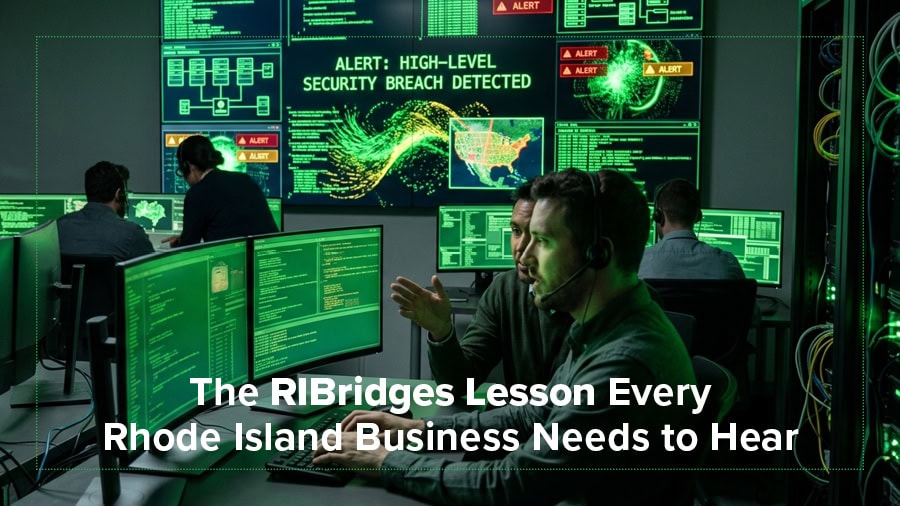
Rhode Island just produced one of the most expensive cybersecurity case studies in the state’s history, and many local businesses still have not paid close attention to what it reveals.
In early 2026, Deloitte reached a $12 million settlement related to the RIBridges data breach, a cyberattack that exposed the personal information of hundreds of thousands of Rhode Islanders who relied on state benefit programs. The breach was significant in scale, and the settlement was significant in cost. But the most important takeaway is not the dollar amount. It is what the incident reveals about how organizations manage access to sensitive data and cybersecurity oversight.
What the RIBridges Data Breach Actually Tells Us
The RIBridges breach was not simply the result of an unstoppable cyberattack. It reflected broader failures in access governance, including questions around who had access to sensitive systems, what security controls were in place, and how access was monitored and reviewed.
That is not just a state government cybersecurity issue. It is a risk facing mid-market businesses across Rhode Island and New England.
If your organization stores employee records, customer information, financial data, or protected health information (PHI), the same question raised by the RIBridges breach applies directly to your business:
When was the last time your organization completed a documented access control audit?
Not an assumption about who has access. Not an outdated spreadsheet. A current, verified review of users, permissions, privileged accounts, vendors, and third-party access.
Access control weaknesses remain one of the most common findings in cybersecurity assessments and one of the most preventable causes of data exposure. In many cases, the damage does not come from advanced hacking techniques. It comes from:
- Accounts that should have been disabled
- Permissions that were never revoked
- Excessive user access
- Third-party oversight gaps
- Inconsistent identity and access management policies
What Rhode Island Businesses Should Do Now
A $12 million cybersecurity settlement is not just a government problem or an enterprise-level issue. It is a reminder that the cost of a data breach can quickly exceed the cost of prevention.
Cybersecurity incidents often create layered consequences, including:
- Legal costs
- Regulatory investigations
- Business interruption
- Customer notification requirements
- Reputation damage
- Long-term operational disruption
Organizations should be proactively reviewing:
- User access permissions
- Multi-factor authentication (MFA) enforcement
- Privileged account management
- Vendor and third-party access
- Access logging and monitoring
- Offboarding procedures for former employees and contractors
Vertikal6’s elevate™ ADVANTAGE vCISO practice helps mid-market organizations identify and close these types of cybersecurity and access governance gaps. As a Microsoft Security Solutions Partner, Vertikal6 provides both strategic cybersecurity oversight and the supporting tools needed to strengthen identity, access management, and security governance programs.
Bottom Line
The RIBridges breach is one of the clearest local examples yet that cybersecurity failures carry real financial, operational, and legal consequences.
The question is no longer whether a Rhode Island business could experience a cybersecurity incident. The question is whether your organization can demonstrate that it took reasonable steps to reduce risk before an incident occurred.