
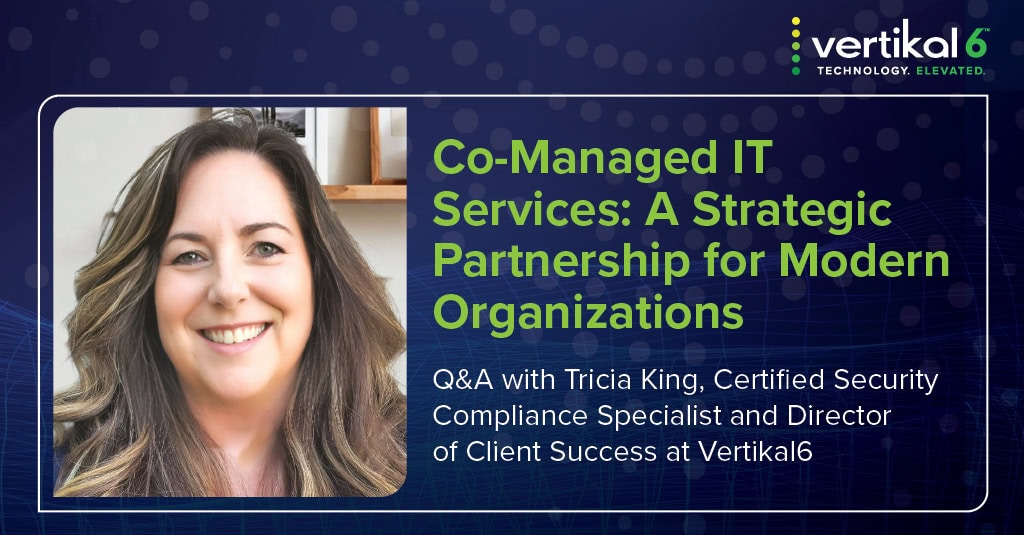
As organizations grow, technology environments become more complex, security risks increase, and operational expectations continue rising. Yet many internal IT teams are expected to manage all of it with limited staffing, limited time, and growing pressure to support both daily operations and long-term strategic initiatives.
For many organizations, the challenge is not a lack of talent. It is a lack of bandwidth.
That is where co-managed IT services are becoming an increasingly valuable solution.
Rather than fully outsourcing IT operations or relying entirely on internal resources, co-managed IT creates a strategic partnership between an organization’s internal IT team and an external technology provider. The goal is to strengthen operational capacity, close expertise gaps, improve efficiency, and provide scalable support without sacrificing internal control.
What Is Co-Managed IT?
Co-managed IT is a collaborative support model that combines internal IT staff with external IT expertise and operational resources.
Unlike fully managed IT services, where a provider handles the organization’s entire technology environment, co-managed IT allows businesses to decide which responsibilities remain internal and which areas benefit from outside support.
This creates a flexible, scalable partnership tailored to the organization’s specific needs.
Organizations may choose to keep strategic leadership, application management, or internal support functions in-house while leveraging external expertise for:
- Infrastructure monitoring
- Cybersecurity support
- Help desk services
- Cloud management
- Documentation
- Compliance support
- Strategic IT planning
- Specialized technical projects
The model is designed to strengthen internal teams, not replace them.
Signs Your Organization May Be Ready for Co-Managed IT
Many organizations begin exploring co-managed IT after internal teams become overwhelmed by increasing operational demands.
According to Tricia King, several common indicators suggest an organization may benefit from a co-managed approach:
- Overworked IT staff
- Limited specialized expertise
- Frequent operational bottlenecks
- Poor documentation practices
- Reactive IT management
- Lack of strategic planning
- Heavy dependence on a single IT employee
- Increasing downtime or recurring technical issues
One particularly common scenario is what many organizations informally call the “one-person IT department” problem.
As businesses grow beyond roughly 75 to 100 employees, relying on a single internal IT professional often becomes unsustainable. Critical institutional knowledge may reside with one individual, creating operational risk if that employee becomes unavailable or leaves the organization.
Co-managed IT helps reduce this dependency while expanding operational capacity.
Co-Managed IT Is About Partnership, Not Replacement
One of the biggest misconceptions surrounding co-managed IT is the fear that external providers are attempting to replace internal staff.
In reality, successful co-managed relationships are collaborative by design.
The external provider functions as an extension of the internal IT team, helping fill operational gaps, provide specialized expertise, and support long-term technology initiatives.
The goal is to create alignment and shared accountability rather than overlapping responsibilities or internal competition.
Organizations that approach co-managed IT as a strategic partnership typically see the strongest outcomes.
Why Clear Role Definition Matters
One of the most important elements of a successful co-managed IT engagement is clearly defining responsibilities from the beginning.
Strong partnerships often use formal operational frameworks such as RACI models to establish:
- Who is responsible
- Who is accountable
- Who should be consulted
- Who should be informed
This clarity helps prevent confusion between:
- Internal IT teams
- External providers
- Vendors
- Leadership stakeholders
When roles are clearly defined, collaboration becomes significantly smoother and operational friction is reduced.
The Operational Benefits of Co-Managed IT
Co-managed IT helps organizations improve operational maturity without dramatically increasing internal headcount.
Benefits often include:
- Reduced workload for internal staff
- Faster issue resolution
- Improved documentation
- Better cybersecurity support
- Expanded technical expertise
- More strategic IT planning
- Improved monitoring and automation
- Better project execution capacity
External providers also bring access to tools and technologies that many organizations would struggle to maintain independently, including:
- Monitoring platforms
- Ticketing systems
- Documentation frameworks
- Automation tools
- Security platforms
- Compliance resources
This allows organizations to scale capabilities more efficiently.
The Financial Advantages of Co-Managed IT
Hiring multiple full-time specialists internally can become extremely expensive, particularly for mid-sized organizations.
Specialized roles such as:
- Cybersecurity analysts
- Cloud architects
- Compliance specialists
- Infrastructure engineers
- Strategic advisors
may only be needed part-time or periodically.
Co-managed IT provides access to broader expertise through shared service models without requiring organizations to hire each specialty role individually.
This creates more efficient resource utilization while improving operational coverage and flexibility.
Why Communication Determines Success
Technology alone does not determine the success of co-managed IT relationships. Communication does.
Organizations transitioning into co-managed environments should:
- Involve internal IT teams early
- Define communication protocols
- Clarify escalation paths
- Establish shared expectations
- Integrate external providers into strategic discussions
- Encourage collaborative planning
Internal resistance often stems from uncertainty rather than opposition. Transparent communication helps create trust and alignment across teams.
Measuring the Value of Co-Managed IT
Organizations should evaluate co-managed IT partnerships based on business outcomes, not just ticket metrics.
Important indicators include:
- Improved project completion rates
- Reduced operational bottlenecks
- Better documentation quality
- Increased employee productivity
- Faster response times
- Improved cybersecurity posture
- Greater strategic alignment between IT and business goals
The most successful engagements solve the original operational challenges that led the organization to seek support in the first place.
Co-Managed IT Relationships Should Evolve Over Time
Technology environments and business needs constantly change.
As organizations grow, responsibilities within co-managed partnerships should be reviewed and adjusted regularly.
Common triggers for reassessment include:
- Rapid organizational growth
- Leadership changes
- Staff turnover
- Infrastructure modernization
- Compliance changes
- Security incidents
- New business initiatives
Annual reviews help ensure the relationship continues aligning with operational priorities and organizational goals.
Co-Managed IT Helps Organizations Scale More Strategically
Many organizations reach a point where internal IT teams can no longer sustainably manage growing operational complexity alone.
Co-managed IT provides a flexible path forward that strengthens internal capabilities while adding strategic expertise, operational support, and scalability.
Rather than replacing internal teams, the model allows organizations to:
- Reduce burnout
- Improve efficiency
- Strengthen security
- Expand expertise
- Improve strategic planning
- Support long-term growth
For organizations looking to modernize operations without losing control of their technology environment, co-managed IT can provide the balance of flexibility, collaboration, and operational maturity needed to scale confidently.